China Best Animal Diagnostics Technologies for Global Buyers?

Time:2026-10-09 Author:Isabella
0%

China has become an important source of animal diagnostic technologies for global buyers. Its manufacturers supply veterinary laboratories, farms, clinics, and public health programs across many regions. This article examines which technologies are used in animal diagnostics and why their practical value differs by application.

Common solutions include PCR systems for rapid pathogen detection, ELISA kits for antibody screening, and next-generation sequencing for complex outbreaks. Portable biosensors can support testing near farms, where refrigeration and laboratory access may be limited. Digital microscopy and AI-assisted imaging also help identify parasites, blood abnormalities, and tissue changes. The details matter. A handheld reader beside a poultry house serves a different need from an automated analyzer in a national laboratory.

Experienced buyers should examine analytical sensitivity, specificity, sample preparation, workflow time, and result interpretation. They should also review manufacturing controls, technical documentation, proficiency testing, and after-sales support. Certifications can strengthen confidence, but they do not replace independent validation under local conditions. Temperature, sample quality, animal species, and operator training may change performance significantly.

Not every platform fits. Some product comparisons remain incomplete because suppliers disclose limited field data. That limitation deserves attention, not avoidance. Reliable purchasing decisions combine peer-reviewed evidence, transparent performance studies, and discussions with veterinarians and laboratory managers. Buyers should confirm local registration requirements before adoption. They should also test representative samples before placing large orders. A practical choice is not always the most advanced one; it is the technology that produces dependable results when real working conditions become difficult.
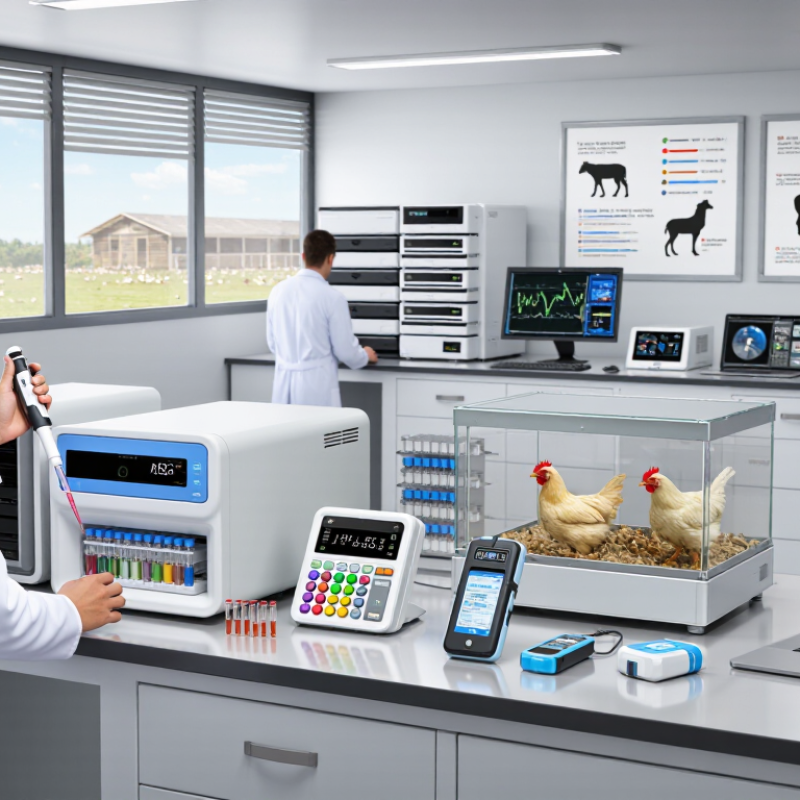
China Best Animal Diagnostics Technologies for Global Buyers?

What Are Animal Diagnostic Technologies?

Animal diagnostic technologies are tools used to detect disease, infection, immune responses, or physiological changes in animals. They support veterinarians, farms, laboratories, and public health teams. The goal is not simply to produce a positive or negative result. A useful system must provide accurate information at the right time.

Common technologies include polymerase chain reaction tests, antibody-based assays, lateral-flow kits, microscopy, ultrasound, radiography, and automated blood analyzers. Molecular tests can identify genetic material from pathogens. Serological tests measure antibodies in blood samples. Imaging technologies reveal internal injuries or abnormal tissue without surgery. Speed matters. Yet, a rapid result can still mislead when sampling, storage, or interpretation is poor.

In practical evaluations, buyers should examine analytical sensitivity, specificity, operating temperature, sample requirements, and result-reading procedures. A rural clinic may need portable equipment, clear instructions, and stable performance during transport. A large laboratory may prefer automation, data connectivity, and higher sample capacity. Quality control materials and independent validation also deserve attention. They show whether results remain dependable across operators and locations.

No technology is perfect. An attractive price may hide recurring costs for consumables, calibration, training, or maintenance. Some platforms perform well with clean samples but struggle with blood, feces, or mixed infections. Buyers should compare evidence from validation studies, local field trials, and post-sale technical support. One overlooked weakness can affect an entire disease-control decision.

China Best Animal Diagnostic Technologies for Global Buyers? — What Are Animal Diagnostic Technologies?

The chart compares representative time-to-result estimates for widely used animal diagnostic technologies. Lateral-flow tests and microscopy are generally suited to rapid screening, while PCR, ELISA, and culture provide different balances of sensitivity, scalability, and confirmation value. Actual turnaround times vary by sample type, laboratory workflow, and test protocol.

Data basis: Typical operational ranges reported in veterinary diagnostic workflows and international animal-health laboratory guidance; values are representative midpoints, not brand-specific performance claims.

How Do Animal Diagnostic Tests Work?

Animal diagnostic tests begin with a carefully collected sample. Veterinarians may use blood, feces, saliva, milk, tissue, or nasal swabs. The sample must be labeled, sealed, and kept at the correct temperature. Poor handling can change the result before testing begins.

In the laboratory, technicians prepare the sample for a specific method. Antigen tests look for parts of a pathogen. Antibody tests detect the animal’s immune response. Molecular tests identify genetic material, often through amplification. Other systems measure enzymes, hormones, or blood cells. Each method answers a different question. A positive result does not always prove active disease.

Accuracy depends on sensitivity, specificity, sample quality, and testing time. A rapid strip may provide useful screening within minutes. Laboratory analyzers can offer deeper measurements but need trained operators and regular calibration. Controls should run with patient samples. This helps reveal contamination, equipment problems, or reagent failure. Results should be read with clinical signs, vaccination history, and herd conditions. No test is perfect. A negative result may need confirmation when symptoms remain strong. Global buyers should review validation data, storage requirements, instructions, and local regulatory acceptance. The details can be easy to overlook.

China Best Animal Diagnostics Technologies for Global Buyers? - How Do Animal Diagnostic Tests Work?

Diagnostic Technology How the Test Works Typical Animal Samples Common Applications Typical Time to Result Main Advantages Important Limitations Global Buyer Considerations
Polymerase Chain Reaction (PCR) Uses repeated temperature cycles to amplify a selected DNA sequence. Fluorescent detection can identify the amplified target in real time. Nasal or oral swabs, blood, feces, tissue, milk, semen, and environmental samples. Detection of bacterial, viral, and some parasitic pathogens; confirmation of suspected infection; herd and flock surveillance. Several hours after sample preparation; complete laboratory workflows commonly take one working day. High analytical sensitivity and specificity when primers and controls are properly designed; suitable for multiplex panels. May detect genetic material from non-viable organisms; inhibitors, poor sampling, or contamination can produce misleading results. Check validated targets, internal controls, extraction requirements, instrument compatibility, and local regulatory acceptance.
Loop-Mediated Isothermal Amplification (LAMP) Amplifies a target nucleic-acid sequence at a constant temperature, eliminating the need for conventional thermal cycling. Swabs, blood, feces, tissue homogenates, milk, and other prepared specimens. Rapid field or near-patient screening for selected infectious diseases in livestock, poultry, aquaculture, and companion animals. Approximately 30–90 minutes for amplification and readout, depending on the workflow. Fast operation, relatively simple equipment, and suitability for decentralized testing. Assay design can be complex; non-specific amplification and carryover contamination must be controlled carefully. Evaluate visual versus instrument-based readout, closed-cartridge design, ambient-temperature stability, and training requirements.
Enzyme-Linked Immunosorbent Assay (ELISA) Uses antibodies or antigens fixed to a plate. An enzyme-linked reaction generates a measurable color change when the target is present. Serum, plasma, milk, oral fluids, and sometimes fecal or tissue extracts. Antibody surveillance, antigen detection, vaccination monitoring, herd screening, and disease-control programs. Usually several hours; batch testing is commonly completed within one working day. Scalable, cost-effective for large sample volumes, and compatible with standardized plate readers. Antibodies may indicate previous exposure or vaccination rather than active infection; cross-reactivity can affect specificity. Review cut-off validation, positive and negative controls, species coverage, plate format, and interpretation rules.
Rapid Immunochromatographic Test Target antigens or antibodies migrate along a membrane and bind to labeled reagents, producing a visible test line. Whole blood, serum, plasma, saliva, nasal discharge, feces, urine, or milk, depending on the assay. Point-of-care screening for selected viral, bacterial, parasitic, or reproductive conditions. Commonly 10–30 minutes. Portable, simple to operate, and suitable for clinics, farms, shelters, and field investigations. Generally less sensitive than laboratory nucleic-acid tests; visual interpretation and early-stage infection may affect results. Confirm intended species, sample volume, storage temperature, shelf life, reading window, and need for confirmatory testing.
Indirect Fluorescent Antibody Test (IFAT) Animal antibodies bind to pathogen antigens on a slide and are detected with a fluorescently labeled secondary antibody under a fluorescence microscope. Serum or plasma. Serological investigation of selected protozoal, bacterial, and viral infections. One day or longer, depending on batching and microscopy capacity. Useful for antibody detection and epidemiological studies when appropriate reference antigens are available. Requires fluorescence microscopy and trained personnel; interpretation can be subjective and cross-reactions may occur. Consider microscope availability, reader training, reference sera, and whether results are qualitative or titer-based.
Virus Neutralization Test Serum is mixed with a live virus or validated viral system to determine whether antibodies prevent infection of susceptible cells. Serum or plasma. Reference serology, vaccine-response assessment, and confirmation of neutralizing antibody activity. Several days, because cell culture and observation are required. Measures functional neutralizing activity rather than only antibody binding. Requires specialized facilities, cell culture expertise, controls, and strict biosafety procedures for relevant agents. Verify biosafety requirements, test standardization, turnaround time, and whether a validated alternative method is acceptable locally.
Bacterial Culture and Antimicrobial Susceptibility Testing Living bacteria are grown on suitable media, identified by laboratory methods, and tested against antimicrobial agents to assess growth inhibition. Swabs, urine, milk, feces, blood, tissue, respiratory specimens, and wound exudate. Diagnosis of bacterial disease, outbreak investigation, and guidance for antimicrobial selection. Typically 1–3 days; slow-growing organisms may require longer. Demonstrates viable organisms and can provide an antimicrobial susceptibility profile. Prior antimicrobial treatment, unsuitable transport, low bacterial load, or fastidious organisms can reduce recovery. Assess culture media availability, transport conditions, identification workflow, susceptibility standards, and waste management.
Microscopy and Staining Cells, parasites, fungi, or microorganisms are concentrated or stained and examined directly with a light microscope. Feces, skin scrapings, blood smears, urine sediment, vaginal smears, respiratory samples, and tissue sections. Parasite detection, blood-cell evaluation, cytology, fungal screening, and rapid assessment of inflammation. Minutes to several hours. Low equipment cost, rapid results, and direct visualization of many cellular or parasitic findings. Sensitivity depends strongly on sample quality, organism burden, staining method, and operator skill. Prioritize microscope quality, reference images, quality-control slides, technician training, and standardized reporting.
Hematology Analyzer Measures cellular properties in blood, such as cell number, size, and hemoglobin-related parameters, using electrical impedance, optical methods, or both. Fresh anticoagulated whole blood, commonly collected with EDTA. Assessment of anemia, inflammation, infection-related changes, hydration status, and general animal health. Usually a few minutes per sample after proper mixing. Fast quantitative results and efficient routine screening. Species-specific reference intervals are important; clots, hemolysis, platelet aggregation, and unusual cell morphology can affect results. Confirm supported species, reagent and calibration requirements, sample stability, maintenance needs, and availability of technical service.
Clinical Chemistry Analyzer Uses photometric, colorimetric, or ion-selective methods to quantify substances such as enzymes, metabolites, proteins, and electrolytes. Serum, plasma, urine, and occasionally other body fluids. Evaluation of liver, kidney, muscle, pancreatic, metabolic, and electrolyte status. Several minutes to a few hours, depending on the panel and instrument workflow. Provides objective biochemical measurements for routine monitoring and clinical decision-making. Results can be affected by hemolysis, lipemia, icterus, fasting status, species differences, and sample handling. Check species reference intervals, open or closed reagent systems, calibration traceability, throughput, and temperature requirements.
Ultrasound Imaging High-frequency sound waves are transmitted into tissue; returning echoes are converted into a real-time image. Usually no collected sample is required; hair clipping or contact preparation may be needed. Pregnancy assessment, abdominal and thoracic evaluation, reproductive examination, and guided sampling. Real-time examination; reports may be available immediately. Non-ionizing, portable systems are available, and dynamic organs can be examined. Image quality depends on operator skill, body condition, gas, bone, and the acoustic window. Consider probe types, portability, image storage, battery performance, software localization, and operator training.
Radiography X-rays pass through the body and are attenuated differently by tissues, creating a two-dimensional image. No collected sample is required. Bone injury, thoracic disease, foreign bodies, dental conditions, and selected abdominal abnormalities. Minutes to several hours, depending on positioning and interpretation. Widely established, fast, and effective for skeletal and thoracic evaluation. Uses ionizing radiation and produces overlapping two-dimensional structures; sedation or positioning may be necessary. Review radiation-safety requirements, detector durability, image export formats, service support, and local licensing rules.
Computed Tomography (CT) Rotating X-ray measurements are reconstructed by computer into cross-sectional and three-dimensional images. No collected sample is required. Complex fractures, nasal and dental disease, lung lesions, tumors, and detailed anatomical planning. Usually minutes for scanning; preparation, anesthesia, and interpretation add time. High anatomical detail and elimination of many superimposition problems found in plain radiography. Higher cost, radiation exposure, facility requirements, and frequent need for anesthesia in animals. Assess gantry size, weight limits, anesthesia infrastructure, image reconstruction, maintenance, and regulatory compliance.
Magnetic Resonance Imaging (MRI) Uses a strong magnetic field and radiofrequency signals to generate high-contrast images, especially of soft tissues. No collected sample is required. Neurological, spinal, joint, muscular, and soft-tissue examinations. Typically 30–90 minutes for scanning, with additional anesthesia and interpretation time. Excellent soft-tissue contrast and no ionizing radiation. High capital and operating costs, longer examinations, anesthesia requirements, and strict control of ferromagnetic hazards. Verify field strength, service capability, anesthesia monitoring, room safety, cooling requirements, and image-transfer standards.
Next-Generation Sequencing (NGS) Generates large numbers of DNA or RNA sequence reads that are compared with reference databases to identify organisms or genetic variants. Blood, tissue, swabs, feces, environmental samples, or cultured isolates. Complex or unexpected infections, pathogen discovery, outbreak investigation, metagenomic analysis, and antimicrobial-resistance research. Several days to weeks, depending on preparation, sequencing, and bioinformatic analysis. Can detect multiple organisms or genetic targets in one workflow and supports high-resolution characterization. Expensive and technically demanding; contamination, host DNA, database quality, and detection thresholds influence interpretation. Confirm bioinformatics support, data ownership, privacy, sample shipment rules, reporting format, and validation status.

Note: Turnaround times are general laboratory estimates and vary according to sample quality, workload, assay design, instrument configuration, biosafety requirements, and local validation. A diagnostic result should be interpreted together with clinical findings, vaccination history, epidemiological information, and relevant reference intervals.

Which Technologies Lead China’s Animal Diagnostics Industry?

China’s animal diagnostics industry is being shaped by faster, more practical technologies. Real-time PCR remains a leading tool for detecting viral and bacterial DNA with high sensitivity. It supports respiratory, gastrointestinal, and reproductive disease testing. Isothermal amplification is also gaining attention because it can work with simpler equipment and shorter workflows.

ELISA continues to serve farms, laboratories, and disease surveillance programs. It is useful for antibody screening across large animal populations.

Lateral-flow tests add speed at clinics and collection points, although their sensitivity may vary with sample quality.

Sequencing platforms are becoming more accessible, helping laboratories investigate unfamiliar pathogens and monitor genetic changes.

Digital result management and automated analyzers further reduce manual errors. Still, no platform wins every case. Some systems look impressive in demonstrations but perform less consistently in crowded field conditions. This gap deserves more honest evaluation.

Tips: Compare sensitivity, specificity, sample preparation, and reporting time before purchasing. Ask for independent validation data from relevant animal species. Check temperature requirements, calibration procedures, and local technical support. A simple workflow may be more valuable than advanced software. Train staff carefully, because poor sampling can weaken even excellent technology. Review results with a qualified veterinarian, especially when clinical signs and test findings disagree. Reliability is built through repeated use, not attractive specifications.

How Can Global Buyers Evaluate Chinese Diagnostic Solutions?

Global buyers should judge Chinese animal diagnostic solutions by evidence, not factory photos or low prices. The World Health Organization reports that 60% of emerging infectious diseases originate in animals, while 75% are zoonotic. Reliable testing therefore protects farms, laboratories, and public health.

Ask for independent performance data. Check sensitivity and specificity against an accepted reference method. Request raw results, sample numbers, confidence intervals, and failure rates. A polished brochure is not validation. The 2024 FAO report on food safety estimates that contaminated food causes about 600 million illnesses annually. This figure makes traceable testing more than a purchasing detail. It becomes a risk-control decision.

Evaluate Chinese suppliers through three practical tests: documentation, reproducibility, and field support. Review quality-system certificates, manufacturing records, lot-to-lot variation, and stability data under realistic shipping temperatures. Test instruments with local samples, not only supplier-provided specimens. Confirm whether software exports readable results and preserves audit trails. Ask how quickly technical teams replace damaged components or investigate invalid tests. A cheap kit can become expensive downtime.

Regulatory acceptance also matters. Compare labeling, risk classification, import rules, and post-market reporting requirements in every target country. Independent laboratory verification adds credibility. So does a transparent complaint history. Buyers should remain cautious when data look unusually perfect; real field studies contain weak samples and occasional failures. That imperfection deserves explanation, not concealment.

What Regulations and Support Should International Buyers Consider?

For international buyers, animal diagnostic technology is not only a performance decision. It is a regulatory project. Each market may require product registration, import permits, and approved labeling. Requirements can differ for livestock, companion animals, and aquaculture. Buyers should request certificates, test reports, and a clear intended-use statement. Ask whether the device is validated for target species and sample types. A technically impressive analyzer may still fail local review.

Reliable suppliers provide traceable quality records, risk assessments, and lot-control procedures. Evidence should explain sensitivity, specificity, repeatability, and known limitations. Independent or accredited laboratory data adds useful confidence. Check quality systems such as ISO 13485 where applicable. Confirm local rules with the competent authority. One certificate is not universal approval. That assumption causes expensive delays.

Support matters after shipment. Buyers need installation guidance, operator training, troubleshooting steps, and reliable access to consumables. Ask about response times, replacement policies, software updates, and language support. Digital systems also require cybersecurity controls and careful handling of animal and farm data. Customs documents should match the physical shipment exactly. Small errors can stop temperature-sensitive materials at the border. No checklist is perfect. A pre-purchase review with local veterinary and regulatory specialists remains a practical safeguard.

FAQS

What are animal diagnostic technologies?

They are tools for detecting disease, infection, immune responses, or physiological changes in animals. They support veterinarians, farms, laboratories, and public health teams. The result must be accurate and timely.

Which technologies are commonly used?

Common options include molecular tests, antibody assays, lateral-flow kits, microscopy, ultrasound, radiography, and blood analyzers. Molecular tests detect pathogen genetic material. Serological tests measure antibodies in blood. Imaging can reveal internal injuries without surgery.

Why does sampling quality matter?

Poor sampling can weaken excellent technology. Blood, feces, and mixed infections may create difficult testing conditions. Storage temperature also matters. A rapid result can still mislead.

Which technologies are gaining attention in China?

Real-time molecular testing remains widely used for viral and bacterial detection. Isothermal amplification may require simpler equipment and shorter workflows. Antibody testing supports large-scale screening. Sequencing helps investigate unfamiliar pathogens and genetic changes.

How should buyers compare diagnostic systems?

Compare sensitivity, specificity, sample preparation, reporting time, and operating temperature. Check calibration steps and result-reading procedures. Ask for independent validation using relevant animal species. Simple workflows can be more valuable than advanced software.

What should rural clinics look for?

Rural clinics may need portable equipment, clear instructions, and stable transport performance. Power needs and temperature limits deserve close attention. Local technical support can prevent long delays. Small details matter.

How can global buyers verify supplier claims?

Request raw results, sample numbers, confidence intervals, and failure rates. Review quality records, stability data, and lot-to-lot variation. Test local samples, not only supplier-provided specimens. A polished brochure is not validation.

What hidden costs can affect the purchase?

The purchase price may exclude consumables, calibration, training, maintenance, and replacement parts. Software problems can also create extra work. A cheap kit may cause expensive downtime. That risk is easy to underestimate.

What should buyers do when test results conflict with symptoms?

Review sampling, storage, controls, and interpretation procedures. Repeat testing when appropriate. Discuss conflicting findings with a qualified veterinarian. No test is flawless. A simple checklist can still miss local problems.

Conclusion

Animal diagnostic technologies are essential tools for detecting, monitoring, and managing diseases in livestock, companion animals, and aquatic species. They include laboratory and field-based methods such as polymerase chain reaction, immunoassays, microscopy, culture testing, ultrasound, and portable analyzers. Understanding which technologies are used in animal diagnostics helps global buyers compare solutions according to testing accuracy, speed, sample requirements, ease of operation, and suitability for different animal species and production environments. These technologies generally work by identifying pathogens, antibodies, genetic material, or physiological changes in samples such as blood, saliva, tissue, milk, or feces.

When evaluating Chinese animal diagnostic solutions, international buyers should consider product performance, quality management, technical support, documentation, supply stability, and compatibility with local veterinary practices. Buyers should also review applicable registration procedures, import requirements, laboratory standards, and post-sale service arrangements in their target markets. Clear validation data, transparent instructions, operator training, and responsible regulatory support can help ensure that selected diagnostic tools are reliable, practical, and appropriate for long-term international use.

Isabella

Isabella

Isabella is a dedicated marketing professional with a sharp focus on driving brand growth and engagement through strategic content creation. With an extensive background in digital marketing, she combines her passion for storytelling with her keen understanding of industry trends to deliver......