China’s veterinary diagnostic market includes manufacturers of analyzers, reagent kits, rapid tests, and laboratory automation systems. Their products support clinics, farms, research centers, and animal health laboratories. However, a polished instrument does not guarantee a reliable result.
The practical question is: what factors affect accuracy in veterinary diagnostics? Accuracy begins with test design and continues through sample collection, storage, preparation, and interpretation. A blood sample exposed to heat may produce misleading values. Poorly calibrated equipment can also shift results, even when the software appears modern. Strong suppliers usually provide validation data, quality-control materials, clear instructions, and technical support. Independent performance testing adds confidence.
Experience in daily laboratory work reveals smaller details. Expired reagents, unstable power supplies, and rushed technicians can influence outcomes. Training matters. So does regular maintenance. Suppliers should explain sensitivity, specificity, detection limits, and known interference risks in practical language. Traceable manufacturing records and responsive after-sales service strengthen trust.
No supplier is flawless. Some published comparisons use limited animal populations or controlled samples. Field conditions are messier. This guide examines leading Chinese veterinary diagnostic suppliers through evidence, usability, quality systems, and service reliability. It also considers where product claims need closer review. Accuracy is not a single feature. It is a chain, and one weak link can affect the final clinical decision.
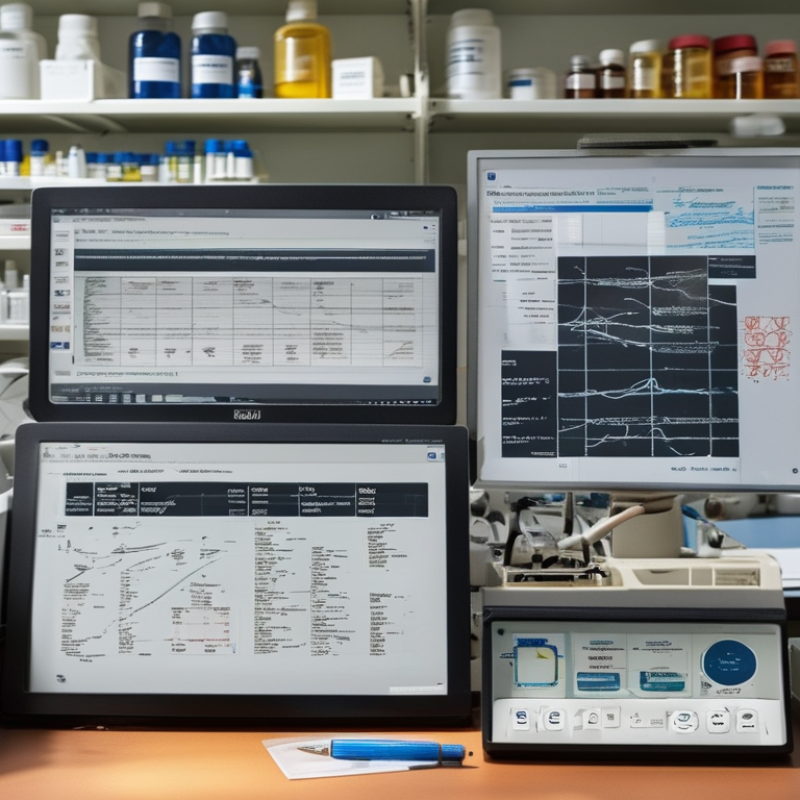
A top veterinary diagnostic supplier in China is defined by more than competitive pricing or a polished catalogue. It should demonstrate technical experience with veterinary samples, including blood, serum, tissue, and fecal material. Clear validation reports should explain sensitivity, specificity, precision, and known limitations. A polished catalogue is not proof.
Accuracy depends on controlled production and careful use. Reliable suppliers maintain batch records, calibrated equipment, stability data, and traceable quality checks. They should provide clear instructions for storage, transport, sample preparation, and result interpretation. Small details matter. A delayed sample or warm reagent can distort a clinic’s decision.
Strong suppliers also support customers after delivery. Trained technical staff should answer questions, review unusual results, and recommend appropriate controls. Independent evaluations, laboratory collaborations, and documented quality systems add credibility. However, certificates alone cannot guarantee every result. Testing conditions vary between clinics, and even experienced users make mistakes. Suppliers should admit these risks and help reduce them through training, internal controls, and practical troubleshooting.
For buyers, the real test is consistency. Request representative performance data, recent batch information, and evidence from comparable veterinary applications. Visit the facility when possible. Observe cleanliness, temperature monitoring, labeling, and record management. Ask difficult questions. The answers reveal more than advertising.
| Evaluation Dimension | Verifiable Benchmark or Data Point | Effect on Diagnostic Accuracy | What a Top Supplier Should Provide | Importance |
|---|---|---|---|---|
| Quality Management System | ISO 13485-based quality management is the recognized framework for medical-device manufacturing, including many in-vitro diagnostic products. | A controlled quality system reduces variation in raw materials, production, testing, document control, and corrective actions. | Current certification evidence, batch records, deviation management, CAPA records, supplier controls, and regular internal audits. | Essential |
| Risk Management | ISO 14971 provides a structured process for identifying, evaluating, controlling, and monitoring product risks throughout the life cycle. | Risk controls help prevent false positives, false negatives, invalid results, and unsafe interpretation of test outcomes. | Documented risk analysis covering specimen collection, transport, storage, operation, result interpretation, and foreseeable misuse. | Essential |
| Analytical Sensitivity | Limit of detection should be established using a documented protocol and should reflect the intended specimen type and clinical application. | Insufficient sensitivity can cause low-level infections or early disease cases to be missed. | Limit-of-detection studies, replicate data, confidence intervals, specimen-specific results, and clear claims for the target pathogen or analyte. | Essential |
| Analytical Specificity | Cross-reactivity testing should include organisms or analytes that are biologically or clinically similar to the intended target. | Strong specificity limits false-positive results caused by related pathogens, interfering substances, or non-target analytes. | Cross-reactivity panels, interference studies, concentration levels tested, acceptance criteria, and complete study reports. | Essential |
| Clinical Sensitivity and Specificity | Clinical performance should be estimated against a justified reference method using an adequate number of representative animal specimens. | Analytical performance alone cannot confirm how accurately a test performs in real veterinary populations. | Species-specific clinical studies, sample-size rationale, confidence intervals, comparator-method details, and results for positive and negative populations. | Essential |
| Species and Matrix Validation | Performance can differ between dogs, cats, livestock, birds, and other species, as well as between serum, plasma, whole blood, feces, urine, and swabs. | Using an assay outside its validated species or specimen matrix can reduce accuracy even when the assay works well under laboratory conditions. | Separate validation data for each claimed species and specimen type, with clearly stated limitations in the instructions for use. | Essential |
| Reference Methods and Traceability | ISO 17511 addresses metrological traceability for values assigned to calibrators and control materials used in in-vitro diagnostic systems. | Traceable calibration improves consistency between production lots, instruments, laboratories, and testing sites. | Calibration hierarchy, reference materials where available, assigned-value procedures, lot-to-lot comparison data, and control-material documentation. | Important |
| Internal Quality Controls | Controls should monitor critical assay steps and identify invalid runs, reagent deterioration, instrument problems, or operator errors. | Effective controls prevent unreliable results from being reported as valid results. | Positive and negative controls, control ranges, invalid-result rules, run-acceptance criteria, and corrective-action instructions. | Essential |
| Reagent and Material Consistency | Critical components should be qualified, inspected, and monitored for lot-to-lot variation. | Variation in antibodies, primers, enzymes, membranes, substrates, or calibrators can change signal strength and result interpretation. | Incoming-material specifications, supplier qualification, lot-release testing, retain samples, and documented lot-comparison studies. | Essential |
| Stability and Shelf Life | ISO 23640 provides principles for stability evaluation of in-vitro diagnostic reagents, including real-time and accelerated studies. | Temperature, humidity, transport time, freeze-thaw cycles, and expiration can affect reagent activity and result accuracy. | Real-time stability data, transport simulation, open-vial or in-use stability, storage limits, expiry justification, and temperature-excursion guidance. | Essential |
| Manufacturing Environment | Environmental monitoring, contamination control, process validation, and equipment maintenance are key controls for diagnostic production. | Contamination or uncontrolled process conditions can cause nonspecific signals, invalid tests, or inconsistent reagent performance. | Environmental-monitoring records, validated critical processes, equipment-calibration records, cleaning procedures, and batch-release criteria. | Important |
| User Instructions and Labeling | Instructions should define intended use, specimen requirements, storage, procedure, result interpretation, limitations, and invalid-result handling. | Clear instructions reduce pre-analytical and operator-related errors, which are common sources of inaccurate veterinary test results. | Species-specific instructions, illustrated procedures, timing requirements, troubleshooting guidance, warnings, and translated technical documentation. | Essential |
| Pre-Analytical Control | Specimen quality depends on collection technique, anticoagulant selection, labeling, transport conditions, storage duration, and preparation. | Hemolysis, lipemia, clotting, contamination, insufficient volume, or improper storage can produce invalid or misleading results. | Specimen-acceptance criteria, rejection rules, transport requirements, stability limits, and training materials for veterinary personnel. | Essential |
| Digital and Instrument Compatibility | Reader-based systems should be evaluated for calibration, optical performance, software version control, and result-transfer reliability. | Instrument drift, software errors, poor image analysis, or incorrect result transmission can affect both qualitative and quantitative results. | Instrument verification, software validation, cybersecurity controls, maintenance schedules, connectivity testing, and audit trails. | Important |
| Post-Market Surveillance | Continuous monitoring of complaints, adverse events, nonconformities, returns, and field performance supports ongoing product improvement. | Early detection of field problems helps prevent repeated inaccurate results and supports timely corrective action. | Complaint-response procedures, trend analysis, field-safety communication, recall readiness, and documented corrective and preventive actions. | Essential |
| Technical Support and Training | Accuracy depends on correct operation, interpretation, maintenance, and troubleshooting after product delivery. | Responsive technical support reduces user errors and helps laboratories identify pre-analytical, analytical, and post-analytical problems. | Technical training, competency materials, response-time commitments, troubleshooting records, and local regulatory or application support. | Important |
| Regulatory and Export Documentation | Documentation requirements vary by destination and may include product registration, conformity evidence, performance evaluation, labeling, and traceability records. | Complete documentation supports lawful use, consistent quality oversight, and transparent evaluation of performance claims. | Current certificates, declarations, performance reports, product specifications, change-notification procedures, and controlled document versions. | Important |
| Supply Continuity | Reliable supply requires controlled production capacity, safety stock, qualified alternative materials, and documented business-continuity planning. | Interrupted supply can encourage unvalidated substitutions or use of expired materials, increasing the risk of inaccurate results. | Forecasting process, lead-time information, batch traceability, continuity plans, change-control notifications, and defined replacement policies. | Important |
Note: The benchmarks above are general evaluation criteria based on internationally recognized quality, risk-management, stability, traceability, and in-vitro diagnostic performance principles. Actual acceptance limits should be established for the intended species, specimen type, analyte, test format, and regulatory market.
: Errors can begin before testing starts. Warm tubes may damage cells. Delayed separation can change glucose, potassium, and enzyme values.
Record collection time, animal condition, transport temperature, and visible sample quality. These details help explain unexpected results.
No. Field sampling is often rushed or difficult. That limitation should be reviewed honestly.
They should provide sensitivity, specificity, repeatability, and interference data. Validation should use relevant species, sample types, and disease stages.
Use internal controls, calibration checks, reagent lot reviews, and external proficiency testing. A failed control should stop reporting.
Compare identical coded samples across suppliers. Record operators, temperatures, sample conditions, and result times.
Small studies can produce impressive numbers. Results may change with different animals, sample types, or disease stages.
Clear instructions and readable controls reduce operating mistakes. Support claims should be tested with practical questions before purchase.
Yes. Repeat checks after several months and after a new production lot. One clinic cannot represent every region.
A top veterinary diagnostic supplier in China is defined by more than product availability. It should demonstrate strong research and development capabilities, consistent manufacturing standards, reliable technical support, and transparent quality documentation. The accuracy of veterinary testing depends on several connected elements, including assay design, reagent stability, instrument calibration, detection sensitivity, and the suitability of the test for different animal species and diseases. Understanding what factors affect accuracy in veterinary diagnostics helps clinics and laboratories make more informed purchasing decisions.
Sample collection, storage, transportation, preparation, and operator technique can significantly influence results, even when the test kit and instrument are well designed. Effective quality control, staff training, repeat testing, and clear instructions are therefore essential. When comparing Chinese veterinary suppliers, buyers should review validation data, batch consistency, performance under practical conditions, after-sales support, and independent quality records rather than relying only on price or marketing claims.

 Petovira Animal